A comparative insight for cosmetic formulators, procurement directors, and brand developers seeking high-purity Vitamin A derivatives at industrial scale.
In the highly competitive functional cosmetics market, active raw materials must deliver measurable, scientifically proven results. For decades, Retinol served as the industry standard for anti-aging formulations. However, the skin must convert Retinol into Retinaldehyde (Retinal), and then into Retinoic Acid to activate cellular receptors. This two-step conversion process significantly dilutes biological potency.
Retinal (Retinaldehyde) represents the next level of retinoid technology. Sitting only one conversion step away from active Retinoic Acid, scientific studies demonstrate that Retinal is converted up to 11 times faster than standard retinol. This dramatically higher biological pathway efficiency translates to faster cellular turnover, rapid wrinkle reduction, and enhanced skin elasticity at lower clinical concentrations.
As a leading supplier, Botanical Cube Inc. provides both Retinal and Retinol in various grades, specialized stabilizing complexes, and customized carrier liposomes to meet your brand's regulatory and efficacy targets.
Both molecules are highly sensitive to ultraviolet light, high temperatures, and oxygenation. Unstabilized retinoids lead to rapid color degradation, formula separation, and a total loss of biological activity. Procurement teams must source from certified manufacturers capable of providing advanced raw stabilization technologies, such as micro-encapsulation, spray-drying, and specialized inert gas packaging.
HPLC Assay Standards
Encapsulation Stability
Empirical data outlining Botanical Cube Inc.'s production capacity, regulatory compliance, and distribution network.
| Parameters | Retinol (Pure / Encapsulated) | Retinal (Retinaldehyde) | Regulatory / Sourcing Notes |
|---|---|---|---|
| Chemical Structure | All-trans-retinol (Alcohol form of Vit A) | All-trans-retinaldehyde (Aldehyde form of Vit A) | Determines solubility and skin reaction rate. |
| Biological Pathway | 2-Step conversion to active Retinoic Acid | 1-Step conversion to active Retinoic Acid | Retinal converts 11x faster than Retinol. |
| Recommended Formulating Dose | 0.1% - 1.0% (Depending on application) | 0.01% - 0.1% (Highly potent at lower doses) | Lower required dose offsets higher material costs. |
| Stability Profile | Moderate; highly sensitive to light and heat | Extremely low without chemical encapsulation | Encapsulated forms are highly recommended. |
| Target Application | Mass-market anti-aging creams, body lotions | Premium derma-cosmetics, target anti-wrinkle serums | Retinal is growing in premium and clinical markets. |
| Regulatory Limits (EU) | Max 0.3% in face, 0.05% in body formulations | Currently under review, widely set at 0.1% max | Crucial for brands targetting European compliance. |
Understanding the economic, logistics, and scientific benefits of sourcing raw materials from China's premier biotech hubs.
Chinese bio-manufacturing utilizes state-of-the-art enzymatic processes and continuous flow microreactors. This eliminates organic solvent residues, minimizes heavy metal traces, and ensures pure, stable isomers of both Retinal and Retinol.
Integrating raw material synthesis with advanced packaging facilities allows us to reduce unit costs. Global brands benefit from lower prices without compromising on HPLC assays or stability guarantees.
Every batch undergoes internal HPLC, GC-MS, and physical stability tests. We provide comprehensive documentation including COA, MSDS, Kosher, Halal, and ISO certifications to streamline customs clearance.
When sourcing active pharmaceutical and cosmetic ingredients, purchasing managers must look beyond price per kilogram. Ensure your supplier meets the following parameters:
Adapting Retinal and Retinol configurations to regional cosmetics markets and specific target demographics.
Driven by clean beauty demands and upcoming EU restrictions on retinol percentages. Brands are rapidly shifting towards low-dose Encapsulated Retinal (0.05%) to deliver high anti-aging claims while staying within regulatory limits.
In China, Korea, and Japan, consumer preference leans toward gentle, barrier-repairing skin care. Combining encapsulated Retinol with botanical extracts (such as Centella Asiatica or Nopal Cactus) reduces the retinoid purging phase.
Retinaldehyde has direct antibacterial properties against Cutibacterium acnes. This unique characteristic makes it the preferred active ingredient for clinical acne formulas and spot treatments.
Answering the technical, regulatory, and logistics questions most frequently raised by cosmetic formulators and procurement agents.
Retinal (Retinaldehyde) is only one step away from conversion to Retinoic Acid in the human skin, whereas Retinol requires two steps (Retinol → Retinaldehyde → Retinoic Acid). Clinical studies demonstrate that Retinal converts faster, resulting in more rapid anti-wrinkle and skin-smoothing effects at lower usage levels, making it ideal for premium cosmetic products.
Pure Retinal is highly unstable. It must be stored in airtight, light-proof aluminum packaging filled with inert gas (Nitrogen/Argon) at temperatures below -20°C (-4°F). During shipping, cold chain logistics are required. However, our encapsulated Retinal/Retinol products are more stable and can be shipped and stored at 2-8°C or room temperature depending on the specific carrier matrix.
Yes, Botanical Cube Inc. specializes in customized encapsulation systems. We offer Liposome-encapsulated Retinal, Cyclodextrin complexes, and polymeric nanospheres. These carriers are tailored to match your formulation's system—whether it is water-soluble (hydrophilic) or oil-soluble (lipophilic)—ensuring optimal stability, skin absorption, and minimal skin irritation.
Our Sanyuan and affiliated factories run on automated process control systems. Every production run is subjected to rigorous High-Performance Liquid Chromatography (HPLC) testing to verify chemical purity and isomer ratios. We provide a full certificate of analysis (COA) containing assay value, heavy metal profiles, microbial limits, and solvent residues with every shipment.
Under recent EU cosmetic safety regulations, Retinol is limited to 0.3% in face formulations and 0.05% in body formulations. Retinal is under review, but industry standards generally recommend levels between 0.01% and 0.1%. Adhering to these limits is vital for brands aiming for international distribution.
Yes, our production facilities and raw materials are certified under ISO 9001, ISO 22000, HACCP, Kosher, and Halal standards. We also provide documentation such as MSDS, Technical Data Sheets (TDS), and stability data to streamline international customs clearance and regulatory filings.
A Global Leader in Natural Ingredients
Benefiting from the solid foundation provided by its parent company, Xi'an Tianben Bioengineering Co., Ltd., Botanical Cube Inc. focuses on researching, developing, producing and selling healthy natural ingredients. With more than two decades of industry experience, it has become a leader in the field, specializing in providing high-quality plant extracts and customized solutions to global customers. Services meet the needs of industries including herbal medicine, health foods, dietary supplements, food and beverages, daily chemicals and cosmetics.
Our operations are supported by three companies - Xi'an Tianben Bioengineering Co., Ltd., Botanical Cube Inc. and Shaanxi Tianben Kangyuan Biotechnology Co., Ltd. - which together operate 3 production bases covering more than 100 acres and process more than 3,000 tons of plant raw materials each year. The product range includes more than 200 plant extracts, and we also provide a variety of certified organic products to meet the global demand for environmentally friendly and healthy solutions. Exporting to 60% of the world's countries, serving more than 200 countries and regions and more than 500 customers from all walks of life.
Our first factory was established in 2012 in Sanyuan City, Xi'an, four years after our company was founded. At that time, our production experience was still in its early stages, and we faced many challenges as we worked to refine our processes. However, we remained committed to continuous improvement, investing heavily in technology, training, and quality control to strengthen our capabilities. These early efforts laid a strong foundation for our future growth, shaping the high standards of excellence that we uphold today.
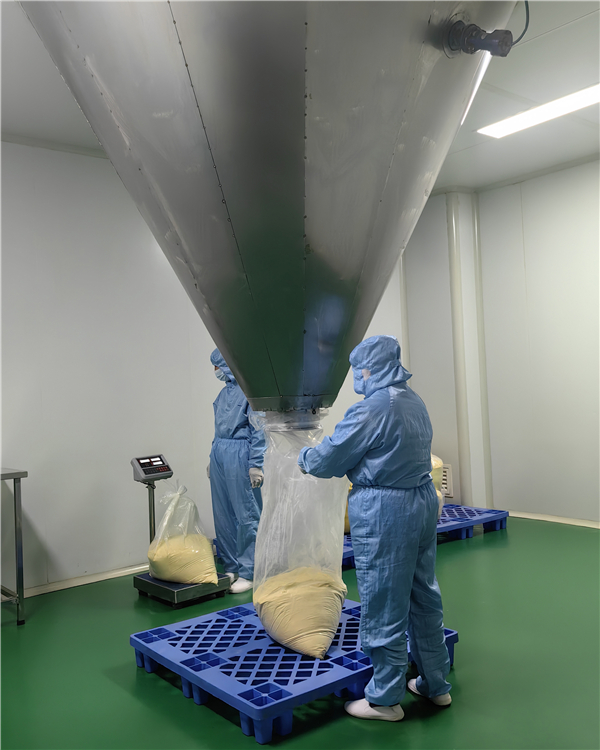
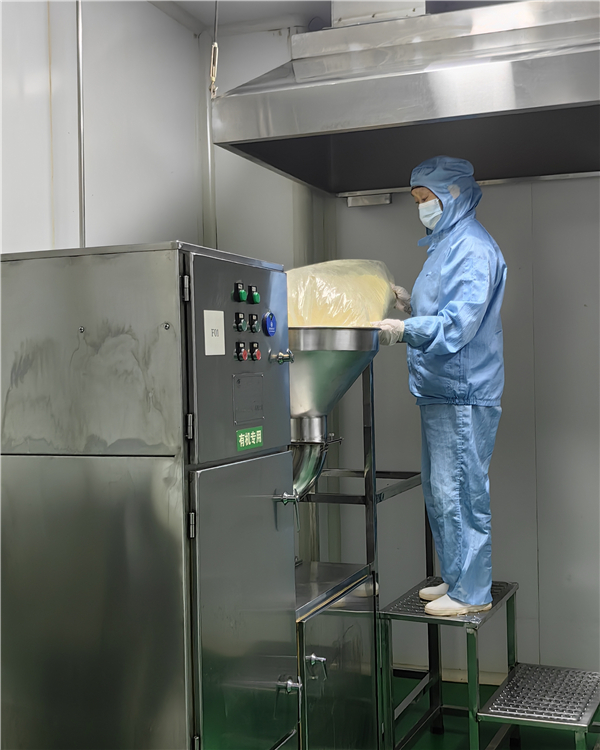
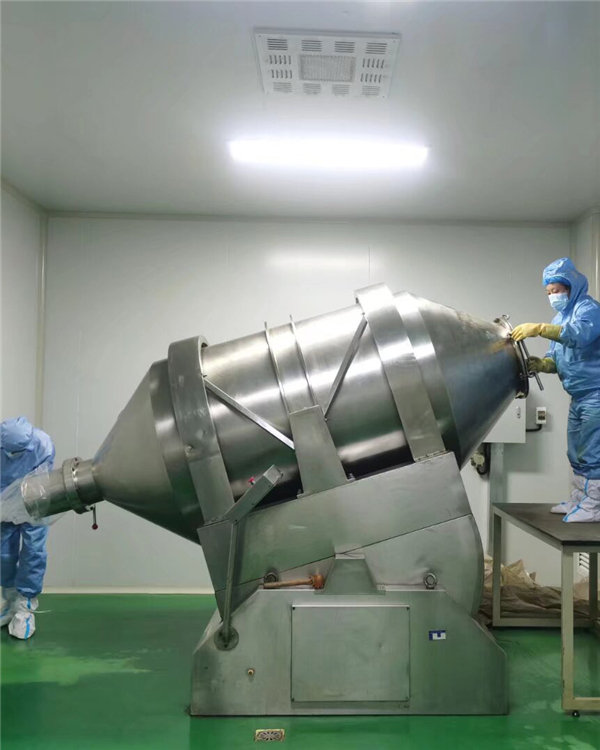
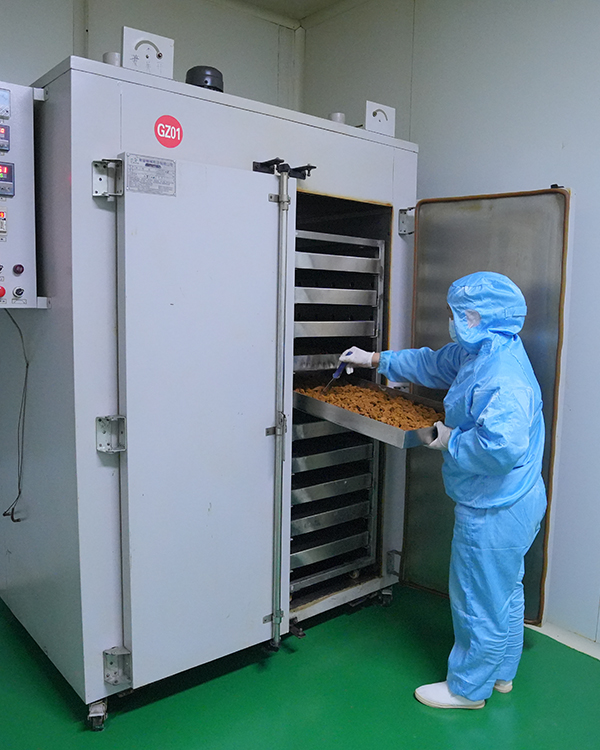
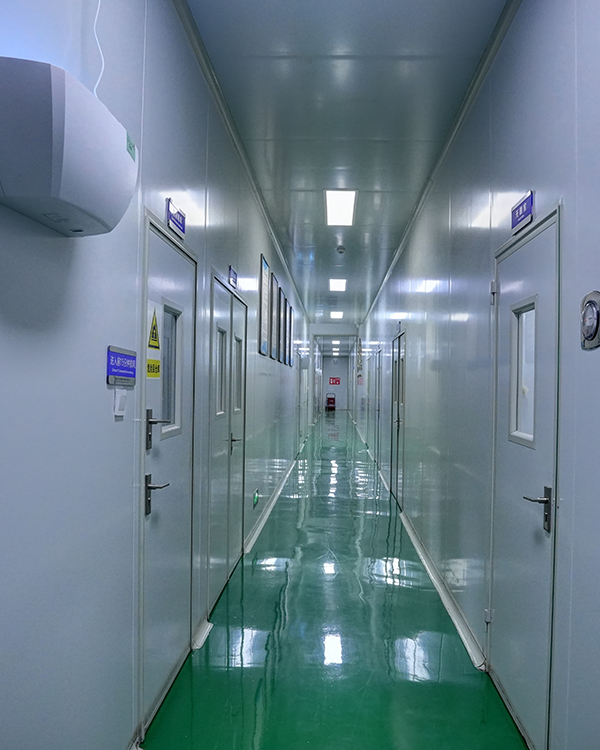
Powder collection, crushing and sieving, mixing and drying processes are all performed in a Class 100,000 cleanroom environment. Our operators strictly follow hygiene protocols and wear sterile gowns, masks and gloves to maintain product purity and safety, thus ensuring that we provide our customers with high quality standards and reliable ingredients.
Cleanroom Operations & Production Line Gallery
 Botanical