A Global Leader in Natural Ingredients
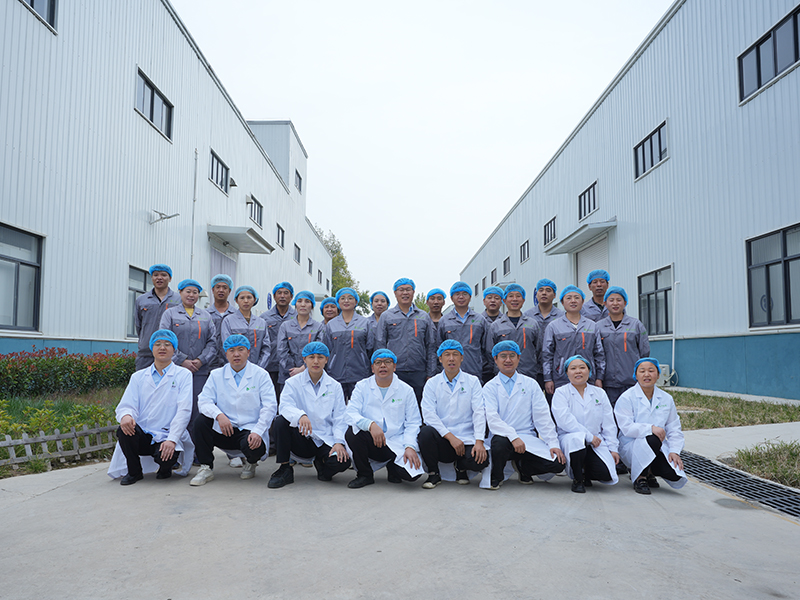
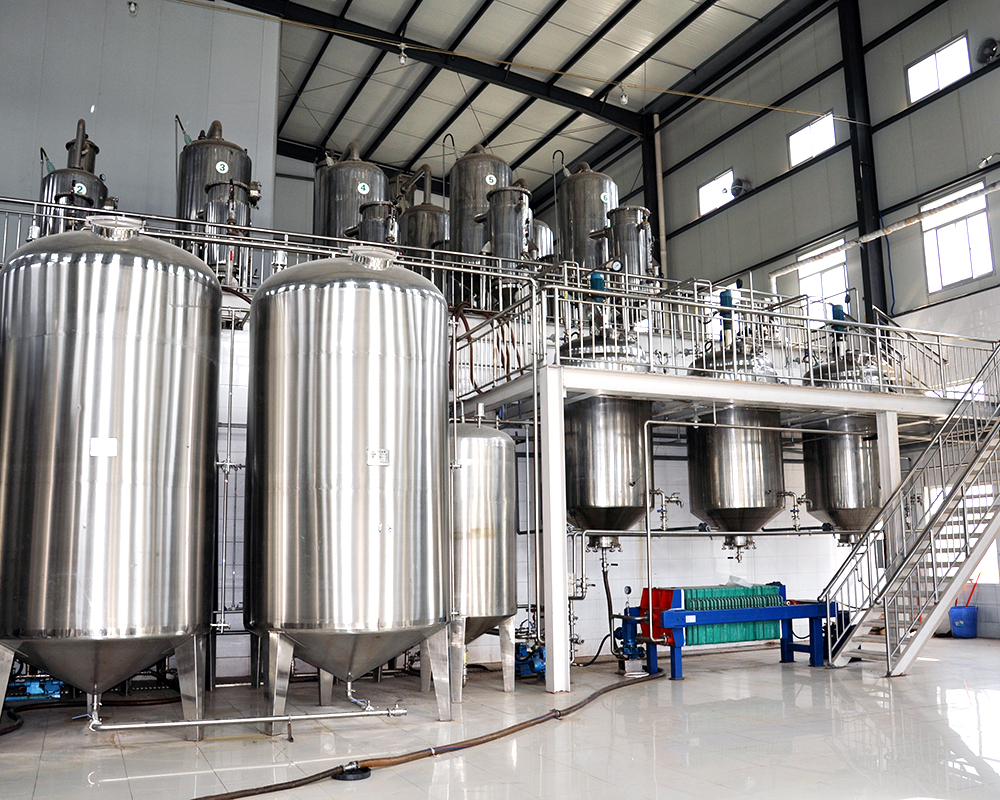
Our operations are supported by three integrated corporate pillars—Xi'an Tianben Bioengineering Co., Ltd., Botanical Cube Inc., and Shaanxi Tianben Kangyuan Biotechnology Co., Ltd.—which together operate 3 production bases covering more than 100 acres and process more than 3,000 tons of plant raw materials each year. The product range includes more than 200 plant extracts, and we also provide a variety of certified organic products to meet the global demand for environmentally friendly and healthy solutions. Exporting to 60% of the world's countries, serving more than 200 countries and regions, and partnering with more than 500 customers from all walks of life.
How Advanced Dietary Fibers Shape Modern Functional Food & Pharmaceutical Markets
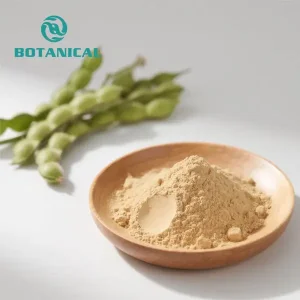
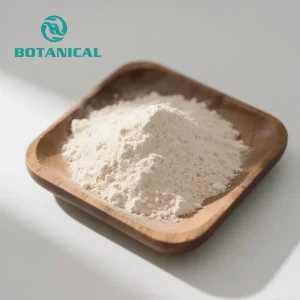
In the current era of clean labels, plant-based diets, and metabolic health awareness, pea fiber powder has emerged as a premier structural stabilizer and health enhancer. Unlike synthetic cellulose or highly allergen-prone wheat/soy derivatives, pea fiber powder derived from yellow peas (Pisum sativum) offers unparalleled functional integrity. It answers the consumer demand for non-GMO, gluten-free, and allergen-free dietary profiles while delivering critical physiological benefits such as glycemic index attenuation, colon health maintenance, and caloric density reduction.
Pea fiber provides high levels of both insoluble and soluble fiber, enabling clean-label fortification in cereals, weight management formulations, and dietary supplement powders without altering the original flavor profiles.
Its exceptional water-binding and oil-binding capacities make it the ideal natural fat replacer in bakery, meat processing, and vegan meat alternatives, improving juiciness and lowering formulation cost.
By tightly binding free water molecules within food matrices, pea fiber effectively minimizes moisture migration, thereby preventing retrogradation in baked goods and retaining structural cohesion in frozen foodstuffs.
Deciphering Particle Distribution, Viscosity Control, and Bio-efficacy
High-quality pea fiber is mostly comprised of structural carbohydrates including hemicellulose, cellulose, and pectin. Depending on the processing methodology (mechanical dry-milling vs. wet-extraction), the ratio of insoluble to soluble fractions can be customized. Below, we outline the structural and physical metrics that define our industrial-grade pea fiber powder:
| Analysis Metric / Specification | Standard Grade (Food Industry) | Microfine Grade (Pharmaceutical / Beverage) | Primary Functional Efficacy |
|---|---|---|---|
| Total Dietary Fiber (TDF) | ≥ 75% - 80% | ≥ 85% | High digestion support, prebiotic substrate activity |
| Water Binding Capacity (WBC) | 1 : 6.0 - 8.0 g/g | 1 : 4.0 - 5.5 g/g | Optimizes dough consistency, prevents moisture loss in baking |
| Oil Binding Capacity (OBC) | 1 : 3.0 - 4.5 g/g | 1 : 2.5 - 3.5 g/g | Stabilizes high-fat emulsions, prevents separation in meat analogues |
| Particle Size (Mesh) | 50 - 80 Mesh | 100 - 200 Mesh | Mouthfeel stabilization; microfine grade avoids gritty textures |
| Moisture Content | ≤ 8.0% | ≤ 6.5% | Prevents micro-bacterial growth and extends shelf-stability |
Our R&D division works closely with global formulation chemists to optimize these physical properties. By adjusting the surface area of the pea fiber particles via specialized pneumatic milling techniques, we can fine-tune how the fibers interact inside food emulsions. This customized engineering is what sets Botanical Cube Inc. apart from typical commodity manufacturers.
Operational Pioneers Since 2012
Uncompromising Hygiene and Micro-Control Standards
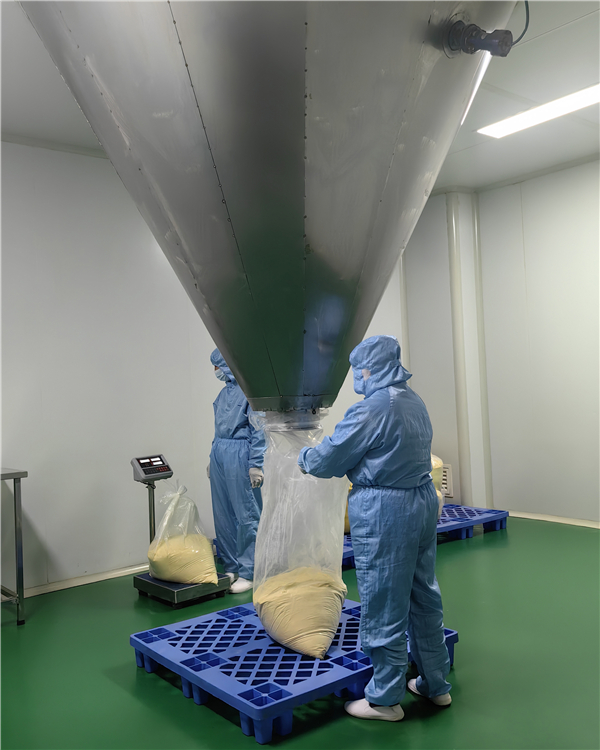
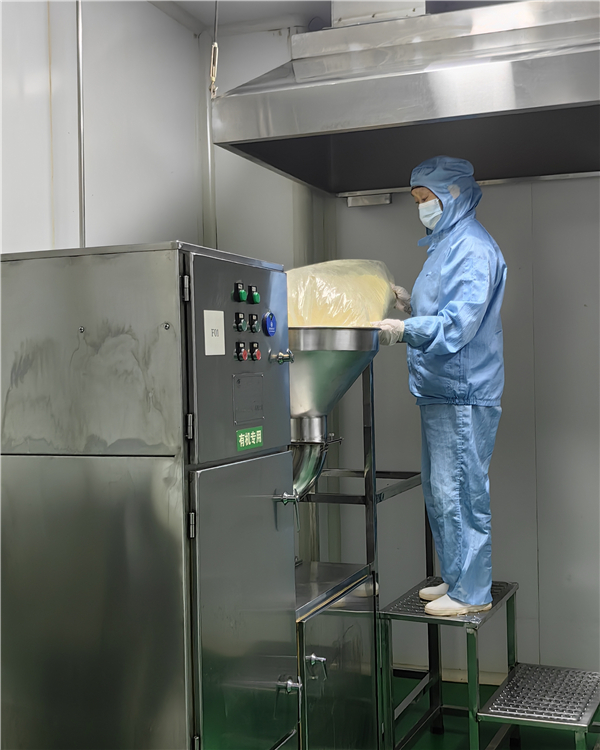
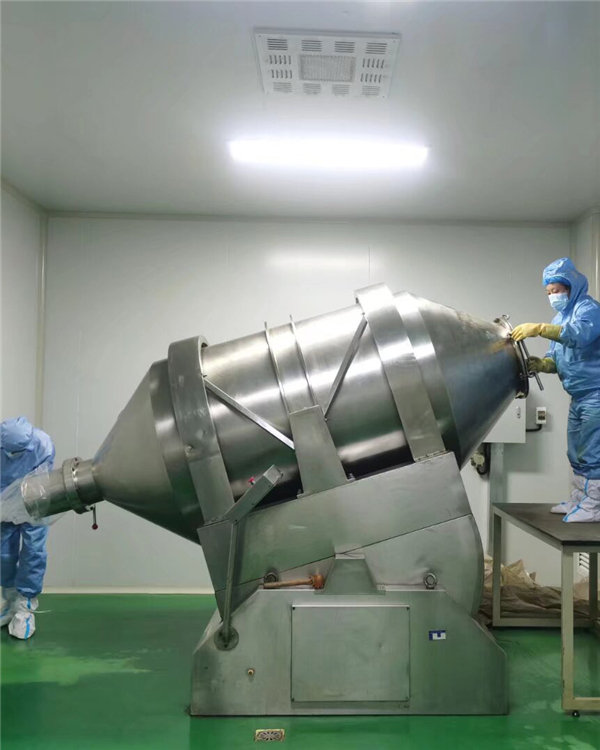
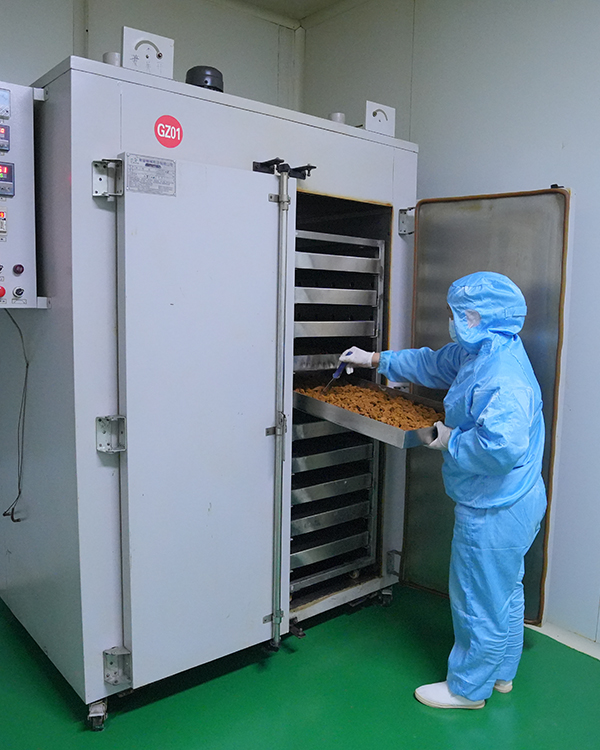
Powder collection, crushing and sieving, mixing and drying processes are all performed in a Class 100,000 cleanroom environment. Our operators strictly follow hygiene protocols and wear sterile gowns, masks and gloves to maintain product purity and safety, thus ensuring that we provide our customers with high quality standards and reliable ingredients.

Streamlining Regional Food Laws and Supply Chain Security
Exporting plant-based raw materials globally requires meticulous attention to cross-border food regulations, phytosanitary requirements, and import tariffs. At Botanical Cube Inc., we don't just supply ingredients; we provide complete administrative and regulatory support to ensure smooth entry into your regional markets.
Fully compliant with the FDA's Nutrition Facts label requirements for dietary fiber classification. We provide complete GRAS (Generally Recognized as Safe) documentation, Heavy Metal profile compliance, and non-GMO project verifications.
Meets all European Food Safety Authority (EFSA) regulations for standard food and dietary fibers. Our products are accompanied by comprehensive allergen clearance certifications, keeping your label 100% clean and secure.
Every batch shipped is traceable down to the raw yellow pea farming collective. We supply complete Certificates of Analysis (COA), HPLC/GC analysis reports for pesticide residues, and microbiology validation logs.
Tailored R&D Advice for Multi-Industry Implementations
Challenge: Emulating fat/muscle mouthfeel and maintaining moisture during heat treatment.
Solution: Standard Grade Pea Fiber is added at 2% - 5% concentration. It forms a thermo-reversible network that anchors free water molecules and fat droplets, ensuring burgers and sausages remain juicy when grilled.
Challenge: Weak crumb structures and rapid staling in gluten-free recipes.
Solution: Integrating 3% - 4% Microfine Pea Fiber mimics the structural lattice of gluten. It holds water tightly, maintaining crumb softness over an extended storage shelf-life, and increases total dietary fiber claims.
Challenge: Sandy texture and precipitation at the bottom of the bottle.
Solution: Microfine Pea Fiber (150-200 mesh) suspends uniformly in liquid matrices. When paired with hydrocolloids (like xanthan or pectin), it provides smooth viscosity control without adding sandiness or grit.
Innovating Plant-Based Nutrition for Tomorrow
As the plant-based protein and fiber market matures, Botanical Cube Inc. is driving research into next-generation modifications of pea-derived cell walls. Our engineering roadmap details our ongoing initiatives to enhance functional characteristics and introduce new bio-activities to global markets.
Technical Solutions & Sourcing Advisory for Procurement Officers
 Botanical