 Botanical
1 / 5
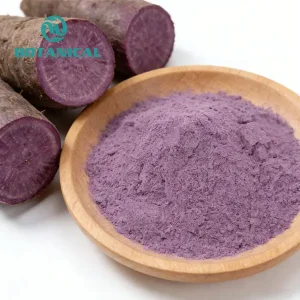
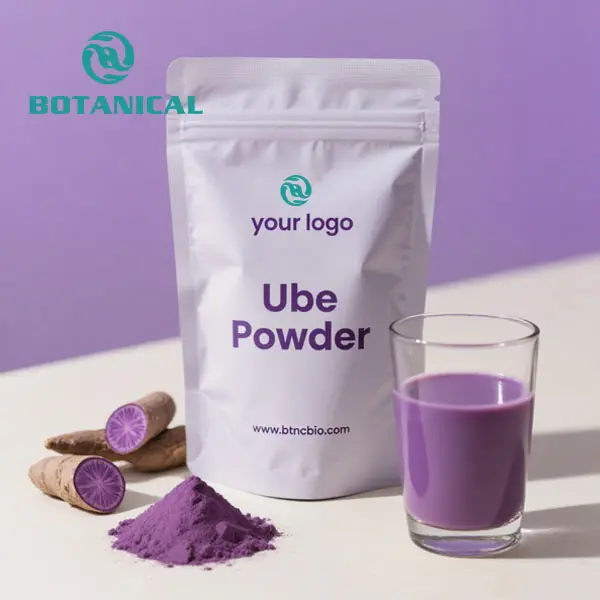
Natural ube powder—also known as purple yam powder or ube extract powder—has become one of the most recognizable natural colorant ingredients in global food and beverage development. At its core, ube naturally contains anthocyanins, dietary fiber, and trace polyphenols, which contribute to its vibrant purple color and mild sweetness. These components not only support clean-label formulation but also help brands create visually appealing bakery items, beverages, desserts, and functional foods without relying on artificial colors.
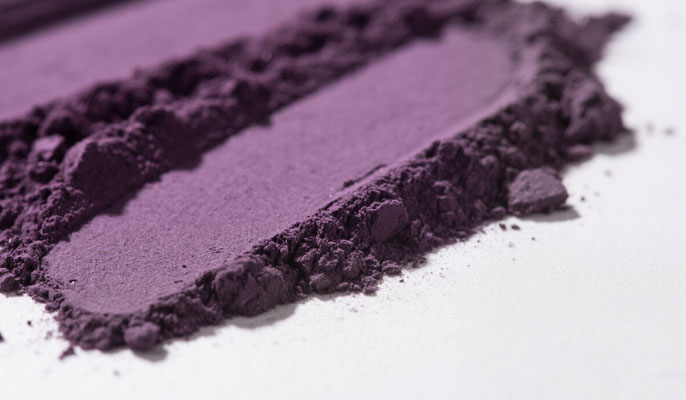
In today's market, natural ube is experiencing fast growth driven by the rising demand for Instagram-friendly purple foods, Southeast Asian-inspired flavors, and plant-based color alternatives. Food manufacturers and private-label brands are actively searching for stable, easy-to-blend forms of ube for large-scale production—especially powders with reliable color consistency, good dispersibility, and strong batch-to-batch stability.
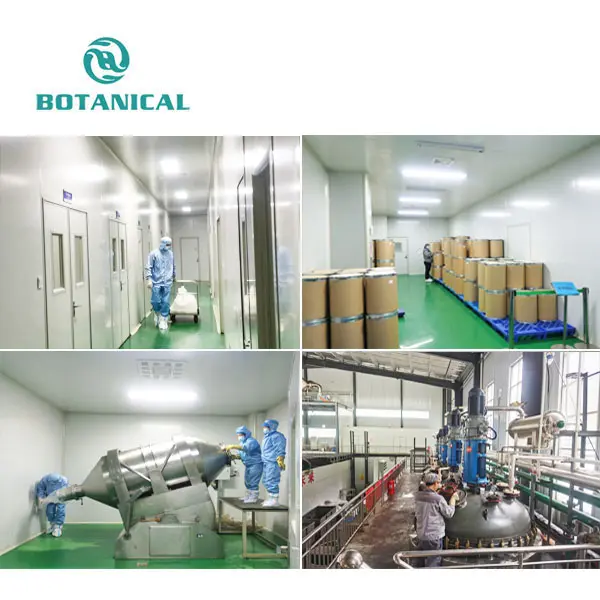
Because ube's anthocyanins are heat-sensitive, a specialized low-temperature drying and fine-particle milling system is used to preserve pigment intensity and prevent color browning. This yields a deeper purple tone and a more stable hue during baking or high-shear mixing, which is critical for commercial bakeries, ice cream plants, and beverage factories.
Additionally, customized blends—such as ube latte premixes, bakery premixes, dessert bases, or functional drink powders—can be tailored to different markets. This flexibility provides ready-to-use solutions that shorten the development cycle and reduce formulation costs.
Many ube powders appear dull or brownish due to high-temperature processing that degrades anthocyanins. Advanced low-temperature drying technology preserves these delicate pigments. The result is a consistently vibrant purple powder with a minimum ASTA color value of 150, ensuring the final product has the eye-catching appeal consumers demand, with superior shelf-life stability.
The process locks in the signature, subtle sweet and nutty flavor of real purple yam, without the off-notes or excessive starchiness found in commodity-grade powders. With moisture content strictly controlled below 3%, this powder offers enhanced microbial stability and a longer shelf life, reducing waste and ensuring consistent performance in food manufacturing.
| Item | Specification | Result |
|---|---|---|
| Appearance | Fine purple powder | Complies |
| Color | Natural purple (uniform) | Complies |
| Odor & Taste | Characteristic, no off-odor | Complies |
| Mesh Size | 80–120 mesh | 98% pass 100 mesh |
| Moisture | ≤ 8.0% | 4.21% |
| Ash | ≤ 5.0% | 2.13% |
| Bulk Density | 0.40–0.65 g/mL | 0.52 g/mL |
| Solubility (in water) | Good dispersion | Complies |
| Anthocyanins | ≥ 0.5% (UV) | 0.73% |
| Polyphenols | ≥ 1.0% (UV) | 1.46% |
| Starch Content | ≥ 60% | 67.2% |
| pH (1% solution) | 4.0–7.0 | 5.62 |
| Loss on Drying | ≤ 8.0% | 4.18% |
| Heavy Metals | — | — |
| Lead (Pb) | ≤ 3.0 mg/kg | < 0.10 mg/kg |
| Arsenic (As) | ≤ 2.0 mg/kg | < 0.10 mg/kg |
| Cadmium (Cd) | ≤ 1.0 mg/kg | < 0.01 mg/kg |
| Mercury (Hg) | ≤ 0.1 mg/kg | < 0.005 mg/kg |
| Microbiology | — | — |
| Total Plate Count | ≤ 10,000 cfu/g | 1,100 cfu/g |
| Yeast & Mold | ≤ 300 cfu/g | 45 cfu/g |
| Coliforms | ≤ 10 cfu/g | < 10 cfu/g |
| E. coli | Negative | Negative |
| Salmonella | Negative | Negative |
| Non-Irradiation | Required | Complies |
| GMO Status | Non-GMO | Complies |
| Allergen Status | No allergens detected | Complies |
| Conclusion | Conforms to specification | Pass |
*Note: Recommended usage varies based on targeted color strength and formulation moisture absorption requirements.