What Is Zeaxanthin Powder Benefits Uses and Dosage?

Time:2026-09-22 Author:Charlotte
0%

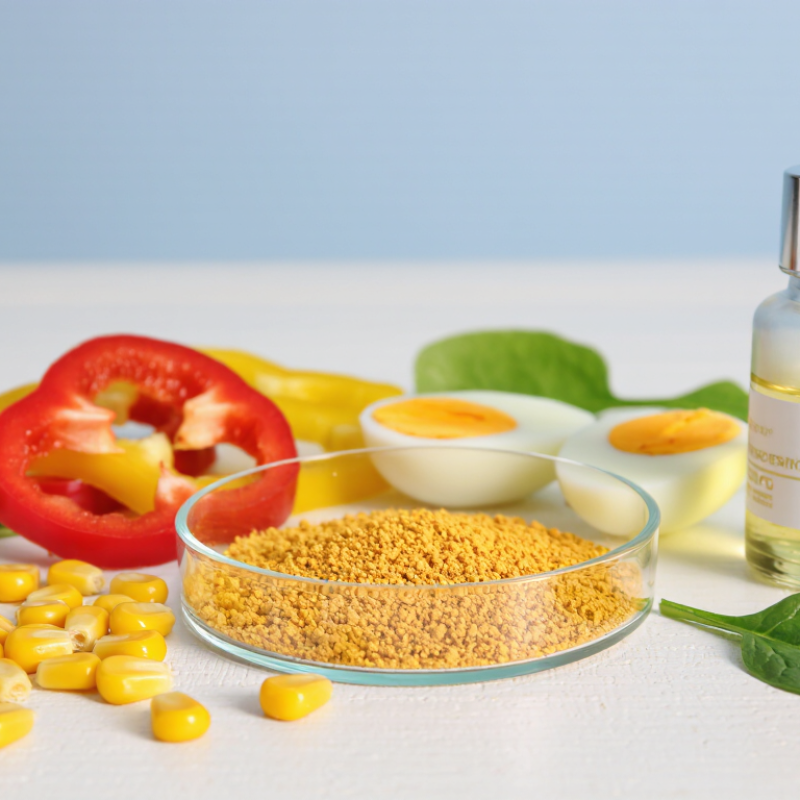
Zeaxanthin Powder is a concentrated source of zeaxanthin, a yellow carotenoid naturally found in corn, peppers, egg yolks, and leafy vegetables. It is commonly used in dietary supplements, functional foods, and eye-health formulations. The ingredient deserves attention because zeaxanthin accumulates in the macula, the central area of the retina responsible for sharp vision.

Evidence is promising, but not unlimited. The National Eye Institute’s AREDS2 clinical trial followed 4,203 adults aged 50 to 85 with intermediate age-related macular degeneration. Its tested formula supplied 2 milligrams of zeaxanthin and 10 milligrams of lutein daily. The study supported this combination for specific high-risk participants, not as a universal treatment. That distinction matters. Zeaxanthin Powder may support macular pigment density and help protect cells from oxidative stress, yet it cannot restore damaged vision or replace medical care.

Dosage depends on purity, formulation, diet, and health status. Many commercial products provide approximately 2 milligrams of zeaxanthin daily, often alongside lutein. However, no universally established recommended daily allowance exists. The NIH Office of Dietary Supplements notes that supplement decisions should reflect individual needs and professional guidance. Check the label carefully. Powder concentration can vary widely, and a larger serving is not automatically better. People using eye medications, managing chronic conditions, or preparing for surgery should consult a qualified healthcare professional. This article examines Zeaxanthin Powder benefits, practical uses, dosage considerations, safety limits, and the evidence gaps consumers should not ignore.
What Is Zeaxanthin Powder Benefits Uses and Dosage?

Zeaxanthin Powder: Definition, Sources, Purity, and Molecular Profile

Zeaxanthin powder is a yellow-orange carotenoid in the xanthophyll family. It naturally occurs in leafy greens, corn, yellow peppers, and egg yolks. Commercial powder usually comes from marigold flowers or other plant-based extracts. At the molecular level, zeaxanthin contains 40 carbon atoms and two oxygen atoms. Its long conjugated structure gives the powder its color and helps it absorb light.

Purity matters more than a bright appearance. A reliable specification should identify zeaxanthin content, isomer composition, moisture, residual solvents, heavy metals, and oxidation markers. High-performance liquid chromatography, or HPLC, offers useful verification. A certificate of analysis adds confidence, but it should match the tested batch.

Zeaxanthin may support macular pigment density and help protect eye tissues from oxidative stress. Evidence is encouraging, not absolute. Powder dosage varies by concentration. Many eye-health formulations provide about 2 mg daily, while some studies use higher amounts. Medical guidance is sensible, especially with eye disease or ongoing medication.

Tips: Measure the powder carefully. Check the actual zeaxanthin percentage, not only the total extract weight. Store it in a cool, dark, sealed container. Heat and oxygen can reduce quality. Mixing it with a meal containing fat may improve absorption. This detail is easy to overlook. Powder can also clump, so a kitchen spoon may give an inaccurate dose. A calibrated scale is better.

Eye Health Benefits Supported by AREDS2’s 10 mg Lutein and 2 mg Zeaxanthin

Zeaxanthin powder is a concentrated source of a yellow carotenoid found in the macula, the central area of the retina. It works with lutein to filter high-energy blue light and neutralize oxidative stress. In practical terms, these pigments help create the macular pigment layer supporting sharp central vision. Powder may be used in capsules, tablets, or fortified foods. However, powder weight is not the same as active zeaxanthin weight.

The AREDS2 clinical trial evaluated 10 mg of lutein and 2 mg of zeaxanthin daily, alongside other eye-health nutrients. This formula was studied mainly in people with intermediate age-related macular degeneration, or advanced disease in one eye. The National Eye Institute reports that such supplementation can reduce the risk of progression to advanced AMD, but it does not restore lost vision. It is not a general vision booster.

The details matter. A 2014 JAMA Ophthalmology analysis found greater potential benefit among participants with the lowest dietary intake of lutein and zeaxanthin. Still, the result should not be treated as a guarantee. AREDS2 did not prove that every healthy adult needs these supplements. People should compare the label with the studied daily amounts, rather than guessing from total powder weight. Eye examinations remain essential. Talk with an eye-care professional before use, especially when taking medicines or managing retinal disease. Formulation quality can vary. That part deserves more attention.

Common Uses in Supplements, Functional Foods, and Vision-Health Formulas

Zeaxanthin powder is commonly added to supplements, functional foods, and vision-health formulas. It is a carotenoid found in the macula, where it helps filter high-energy blue light and supports antioxidant protection. Research suggests that zeaxanthin may help maintain visual function, especially when combined with lutein. It does not restore damaged vision or replace eye examinations. That distinction matters.

In supplements, manufacturers may use powder in capsules, tablets, soft chews, or oil-based blends. Typical formulas provide around 2 mg of zeaxanthin daily, although the appropriate amount depends on the full formula, absorption system, age, and health history. Follow the product label and ask an eye-care professional before using higher doses. Powder can also enrich nutrition bars, fortified drinks, and meal powders, but its color may appear yellow-orange. Poor dispersion can create uneven dosing. A clean formulation needs controlled mixing and stability testing.

Vision-health formulas often combine zeaxanthin with lutein, vitamins, or minerals. These combinations are designed for long-term nutritional support, not immediate results. Evidence is encouraging, yet not every product has equal quality or clinical support. Check the ingredient amount, testing information, and storage instructions. More is not always better. Personally, I would treat zeaxanthin as one small part of eye care, alongside balanced nutrition, regular examinations, and protection from excessive sunlight.

Zeaxanthin Powder Dosage: Evidence-Based Intake of 2 mg Daily

Zeaxanthin is a yellow carotenoid concentrated in the macula, the central area of the retina.

It helps filter blue light and supports antioxidant protection. However, it is not a cure for blurred vision, cataracts, or age-related eye disease. Benefits may be greater when dietary intake is low. Eggs, corn, orange peppers, and leafy vegetables provide small amounts.

A commonly studied supplemental intake is 2 mg of zeaxanthin daily. The AREDS2 research used 2 mg alongside lutein, although that formula was designed for specific eye-health risks. It should not be treated as a universal prescription.

Powders require careful measurement. A kitchen teaspoon is unreliable. Use the product’s calibrated scoop or a precise milligram scale, and follow its stated concentration.

Take zeaxanthin with a meal containing some fat. This may support absorption. People with diagnosed retinal disease, pregnancy, chronic conditions, or regular medication use should ask a qualified clinician before supplementing.

Zeaxanthin is generally well tolerated at studied amounts, but long-term evidence for every powdered product is not equally strong. That limitation matters.

More is not automatically better, and a higher dose may add cost without adding protection. Monitor vision changes professionally rather than relying on supplements alone.

Safety, Absorption, Quality Standards, and Potential Interactions

Zeaxanthin powder is a fat-soluble carotenoid, so absorption may improve when taken with a meal containing healthy fat. A simple option is yogurt with nuts or an avocado-based meal. Taking it with water alone may be less effective, although individual absorption varies. Dosage should follow the product’s tested serving size, not guesswork. Research often examines zeaxanthin alongside lutein, so results may not apply to every single-ingredient powder.

Safety appears favorable at commonly studied amounts, but “natural” does not mean risk-free. Possible concerns include stomach discomfort, skin color changes, or sensitivity to the powder’s carriers. People who are pregnant, breastfeeding, managing liver disease, or using prescription medicines should ask a qualified healthcare professional first. No major drug interaction is firmly established, yet evidence remains limited. That matters. A clinician may also review medicines that affect fat digestion or nutrient absorption.

Quality can change between suppliers. Look for a clear zeaxanthin identity, stated concentration, batch testing, and certificates covering heavy metals, microbes, pesticides, and residual solvents. Good manufacturing practices are useful, but they do not prove every batch is equally potent. Packaging should protect the powder from light, heat, and moisture. An independent laboratory report is more reassuring than vague purity language. I would also check whether the test measured zeaxanthin itself or only total carotenoids. That distinction is easy to miss.

What Is Zeaxanthin Powder Benefits Uses and Dosage? - Safety, Absorption, Quality Standards, and Potential Interactions

Data Dimension Evidence-Based Information Practical Guidance
What Zeaxanthin Is Zeaxanthin is a naturally occurring xanthophyll carotenoid found in foods such as corn, orange and yellow peppers, egg yolks, and leafy green vegetables. Powder is commonly used as an ingredient in capsules, tablets, softgels, beverage powders, and other dietary supplement formats.
Primary Biological Location Zeaxanthin is concentrated in the macular pigment of the human eye, together with lutein and meso-zeaxanthin. Its presence in the macula explains why it is commonly included in eye-health nutrition products.
Potential Eye-Health Role Zeaxanthin can help filter portions of blue light and contributes antioxidant activity in laboratory and biological systems. Evidence for preventing or treating eye disease varies by condition and formulation. It should not be presented as a cure for age-related macular degeneration, cataracts, or other eye disorders.
Common Uses Common uses include dietary supplementation for macular pigment support, general eye-health formulations, combination products containing lutein, and research or food-fortification applications. Use should complement, not replace, regular eye examinations, a balanced diet, and clinically indicated treatment.
Typical Supplemental Amount There is no universally established daily requirement for zeaxanthin from supplements. A frequently studied eye-health combination contains 2 mg of zeaxanthin with 10 mg of lutein per day. Follow the product label or advice from a qualified healthcare professional. Do not assume that a studied combination is appropriate for every person.
Clinical-Formula Context The AREDS2 eye-health formulation studied 2 mg zeaxanthin and 10 mg lutein along with other nutrients in specific populations at risk of advanced age-related macular degeneration. AREDS2 is a specific clinical formulation, not a general recommendation to take every ingredient or dose without medical guidance.
Absorption Characteristics Zeaxanthin is fat-soluble. Absorption can be influenced by the food matrix, formulation, meal composition, and the presence of dietary fat. Taking the supplement with a meal that contains some fat may be more suitable than taking it on an empty stomach, unless the label or clinician advises otherwise.
Powder Form Considerations Powder may contain free zeaxanthin, an esterified form, or a dispersed formulation. These forms can differ in stability, solubility, bioavailability, and handling requirements. Check the declared chemical form, active content, serving size, carrier ingredients, and storage instructions before purchase or use.
Solubility and Formulation Unformulated carotenoid powder generally has low water solubility. Emulsions, beadlets, oil-based carriers, and other delivery systems may improve dispersion and handling. Do not compare products solely by powder weight; compare the amount of actual zeaxanthin supplied per serving.
Expected Onset of Benefits Changes in blood carotenoid levels may occur before changes in macular pigment. Any eye-health effect is unlikely to be an immediate, short-term result. Consistent use, adequate dietary intake, and professional monitoring are more appropriate than expecting rapid visual improvement.
Commonly Reported Tolerability Zeaxanthin is generally well tolerated at commonly studied supplemental amounts. Mild digestive discomfort may occur with some formulations. Stop use and seek medical advice if a serious or persistent reaction develops.
Possible Visible Side Effect Very high intake of carotenoids may contribute to carotenodermia, a usually harmless yellow-orange skin coloration. This is different from jaundice. Persistent yellowing of the skin or eyes should be medically evaluated rather than assumed to be a supplement effect.
Pregnancy and Breastfeeding Specific safety data for isolated zeaxanthin powder during pregnancy and breastfeeding are limited compared with data for normal food intake. Use only after discussing the product, dose, and full ingredient list with a healthcare professional.
Children and Adolescents Routine high-dose supplementation has not been established for healthy children or adolescents. Use in minors should be guided by a pediatrician or other qualified healthcare professional.
Potential Drug Interactions Well-established clinically significant interactions with zeaxanthin alone are limited. However, supplements may contain additional ingredients that change the interaction profile. Review the complete formula with a pharmacist or clinician when using anticoagulants, antiplatelet drugs, lipid-lowering medicines, or multiple supplements.
Eye-Medicine Considerations Zeaxanthin supplements do not replace prescription eye medicines, injectable treatments, surgery, or prescribed nutritional formulas. People receiving treatment for macular or retinal disease should inform their eye-care professional before starting a new supplement.
Allergy and Excipient Review The active carotenoid may not be the source of an allergy; carriers, gelatin, soy, dairy-derived ingredients, colorants, or other excipients may be relevant. Read the full ingredient declaration and select a suitable formulation for known allergies or dietary restrictions.
Identity Testing Quality testing should confirm the identity of zeaxanthin using an appropriate analytical method, such as chromatographic testing. Prefer products supported by a certificate of analysis or independent laboratory documentation showing identity and active content.
Assay and Potency The label should state the actual zeaxanthin amount per serving and distinguish it from the total weight of the powder, carrier, or extract. Look for batch-specific potency results and a clearly defined acceptance range.
Contaminant Controls Appropriate quality programs may test for heavy metals, microbial contamination, residual solvents, pesticides, and adulterants, depending on the raw material and manufacturing process. Choose products with documented testing against applicable food or supplement safety requirements in the intended market.
Stability and Packaging Carotenoids can be sensitive to oxygen, light, heat, and moisture, which may reduce potency over time. Use opaque, tightly closed packaging and follow the stated temperature, humidity, and expiration-date instructions.
Manufacturing Standards Good manufacturing practice controls should address raw-material identity, batch traceability, sanitation, process control, packaging, and finished-product testing. Independent certification can provide additional assurance, but certification does not prove that the product will produce a specific clinical benefit.
Regulatory Status Regulatory classification and permitted claims differ by country. A dietary supplement is not automatically equivalent to an approved medicine. Avoid products making disease-treatment claims that are not supported or authorized for the relevant jurisdiction.
When to Seek Medical Advice Professional advice is especially important for people with retinal disease, pregnancy, chronic illness, planned surgery, allergies, or use of multiple medicines. Seek urgent eye care for sudden vision loss, new flashes, a large increase in floaters, severe eye pain, or a curtain-like shadow.
Overall Use Assessment Zeaxanthin powder can be a convenient source of a dietary carotenoid, but product quality, formulation, dose, health status, and the intended benefit all influence its suitability. Use a transparent, tested product at a clearly stated dose and treat supplementation as part of an overall eye-health plan.

Important: This table is for general educational purposes and is not a substitute for individualized medical advice, diagnosis, or treatment. Dosage and suitability should be confirmed with a qualified healthcare professional.

FAQS

What is zeaxanthin powder commonly used for?

It is used in supplements, fortified drinks, nutrition bars, and vision-health formulas.

How does zeaxanthin support visual health?

Zeaxanthin is found in the macula.

How much zeaxanthin is commonly included in formulas?

Some formulas provide about 2 milligrams daily.

Should zeaxanthin powder be taken with food?

Usually, absorption may improve with a meal containing healthy fat.

What products may contain zeaxanthin powder?

It may appear in capsules, tablets, soft chews, oil-based blends, and meal powders.

Is zeaxanthin safe for everyone?

Safety appears favorable at commonly studied amounts.

Can zeaxanthin interact with medicines?

No major interaction is firmly established.

How can buyers assess zeaxanthin powder quality?

Check the ingredient identity, concentration, batch testing, and storage instructions.

Conclusion

Zeaxanthin Powder is a concentrated source of zeaxanthin, a naturally occurring carotenoid found in the macula and other colorful plants. Its molecular profile and antioxidant activity make it valuable for eye-health nutrition, especially in formulas designed to support macular function and protect visual cells from oxidative stress. Research associated with the AREDS2 nutrient combination highlights 2 mg of zeaxanthin alongside 10 mg of lutein as an important daily amount for specific vision-support applications.

Common uses include dietary supplements, functional foods, and specialized vision-health formulas. A typical evidence-based intake is 2 mg daily, although individual needs may differ. Absorption may improve when Zeaxanthin Powder is taken with a meal containing healthy fats. Consumers should select products with verified purity, accurate labeling, and appropriate quality controls. Zeaxanthin is generally well tolerated at recommended amounts, but people who are pregnant, taking medication, or managing an eye condition should consult a qualified healthcare professional before use.


Charlotte

Charlotte

Charlotte is a seasoned marketing professional with a deep understanding of the company's portfolio and a passion for elevating its presence in the market. With a keen eye for detail and a commitment to excellence, she ensures that our professional blog is regularly updated with insightful articles......