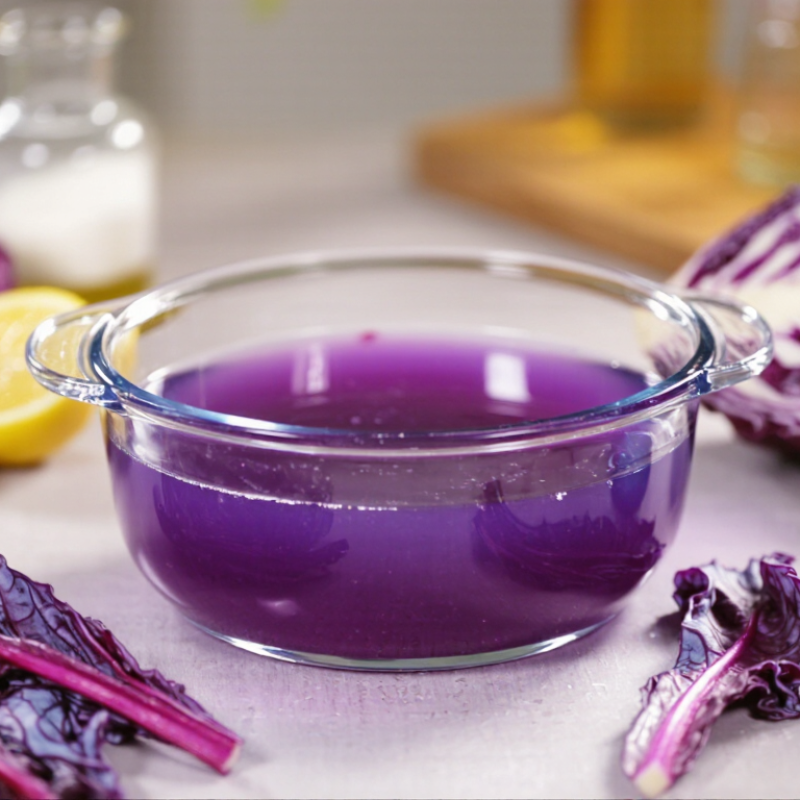
Purple Cabbage Extract is gaining attention as consumers seek recognizable, plant-based ingredients. It is produced from red or purple cabbage leaves, which contain anthocyanins, water-soluble pigments responsible for violet, red, and blue shades. These compounds can change color when acidity changes. A lemon-bright solution may appear pink, while an alkaline mixture can shift toward blue-green.
The commercial opportunity is visible. Grand View Research reported that the global natural food colors market was valued at approximately USD 1.9 billion in 2023. Its analysis also identified clean-label demand and plant-derived ingredients as important growth drivers. MarketsandMarkets similarly describes natural colors as a growing segment, supported by consumer concerns about synthetic additives. These reports help explain why Purple Cabbage Extract appears in beverages, confectionery, bakery products, supplements, and educational pH experiments.
Its uses extend beyond visual appeal. Food manufacturers may use it as a natural coloring ingredient, although shade stability can be affected by heat, light, oxygen, and formulation acidity. Researchers also examine its anthocyanin content for antioxidant potential. However, laboratory findings do not automatically prove a medical benefit in humans. That distinction matters.
The evidence is promising, but uneven. Product quality can vary with cabbage variety, extraction method, concentration, and storage. Regulatory acceptance also differs by country and intended use. A responsible evaluation should examine the ingredient label, technical specifications, safety documentation, and permitted applications. Purple Cabbage Extract is useful, but it is not a universal solution. Its strongest role may be as a versatile natural color source with additional research potential.
What Purple Cabbage Extract Is
Purple cabbage extract is a concentrated ingredient made from the leaves of red or purple cabbage, Brassica oleracea. Producers usually use water, ethanol, or another food-grade solvent to draw out soluble compounds. The result may appear as a deep violet liquid, powder, or spray-dried concentrate.
Its signature compounds are anthocyanins. These natural pigments create purple, blue, and reddish colors. Their shade changes with acidity, like a small kitchen pH experiment. In acidic foods, the color often turns redder. In less acidic mixtures, it can look bluish. The extract may also contain glucosinolates, vitamin C, and other plant compounds. USDA FoodData Central lists about 57 milligrams of vitamin C per 100 grams of raw red cabbage. However, extraction can change the final nutrient profile considerably.
Food manufacturers commonly use purple cabbage extract as a natural color source for beverages, confectionery, sauces, and laboratory pH demonstrations. Some supplement products also include it for its anthocyanin content. Evidence is more reliable for antioxidant activity in laboratory studies than for specific human health outcomes. That distinction matters. A 2023 review in Foods reported promising research on red cabbage anthocyanins, but it also noted differences in extraction methods and clinical evidence. Color strength is not a quality guarantee. Light, heat, oxygen, and storage time can reduce pigment stability. Testing for anthocyanin concentration, contaminants, and microbial safety remains essential. Fresh-looking color can still mislead.
Key Compounds Found in Purple Cabbage Extract
What Is Purple Cabbage Extract Used For?
Purple cabbage extract is mainly used as a concentrated source of anthocyanins, the pigments behind its deep violet color. These compounds may support antioxidant activity in laboratory and food applications. Their levels change with variety, harvest time, cooking, and extraction conditions. That variation matters.
Glucosinolates are another important group. When cabbage tissue is cut or crushed, enzymes can form compounds such as isothiocyanates. Researchers study these molecules for their potential cellular protective effects. However, human evidence remains uneven. Purple cabbage also supplies vitamin C and polyphenols. USDA FoodData Central reports about 57 milligrams of vitamin C per 100 grams of raw red cabbage. Extracts may not retain the same nutrient profile.
Commercial formulas often use the extract for natural color, functional beverages, capsules, or antioxidant-focused research. Anthocyanins can shift from red to blue as acidity changes, making them useful in pH-sensitive foods. EFSA evaluations emphasize that health claims need specific, well-designed evidence. A colorful powder is not proof of a clinical benefit. I would check the botanical name, extraction solvent, anthocyanin standardization, and independent testing. The label may look exact. The science is not always that tidy.
What Is Purple Cabbage Extract Used For? Key Compounds Found
Purple cabbage extract is valued for its natural pigments and phenolic compounds. The chart compares the molecular masses of representative compounds reported in red cabbage; it does not show their concentrations.
Cyanidin-based anthocyanins give purple cabbage its characteristic color. Phenolic acids such as caffeic, ferulic, and sinapic acid are also present; these compounds are studied for their antioxidant properties.
Common Uses in Food and Natural Products
What Is Purple Cabbage Extract Used For?
Purple cabbage extract is commonly used as a natural colorant in food and natural products. Its anthocyanins can create red, purple, or blue shades. The final color depends on acidity, heat, and storage conditions. In acidic foods, it may appear bright pink or red. Manufacturers add it to drinks, sauces, jellies, pickled vegetables, and some baked products. It can also support the visual appeal of powdered drink mixes and plant-based foods. However, color intensity may fade over time. This practical limitation is often overlooked.
In natural products, the extract may appear in dietary supplements, botanical blends, and personal-care formulas. Anthocyanins are studied for antioxidant activity, but laboratory findings do not prove medical benefits for every product. I would not treat purple cabbage extract as a cure or a replacement for professional care. Product quality matters. Extraction methods, concentration, testing, and storage can change its performance. Clear labeling helps users understand whether the ingredient is intended for color, nutrition, or both.
Tips: Check the ingredient’s intended use before adding it to a recipe. Test a small sample first, especially when using acidic ingredients. Store the extract away from heat, light, and moisture. Read the full label, including serving size and allergen information. Results can vary. That is worth remembering.
Potential Health Benefits and Research Findings
Purple cabbage extract is valued mainly for anthocyanins, the pigments that give the vegetable its deep violet color. These compounds can act as antioxidants in laboratory tests, but test-tube results do not prove a health benefit in people. Color is not a clinical dose. The USDA FoodData Central database reports about 57 mg of vitamin C per 100 g of raw red cabbage; extract products may differ greatly in composition and concentration.
Research on anthocyanins more broadly suggests possible effects on cardiovascular markers. A 2016 systematic review and meta-analysis in the American Journal of Clinical Nutrition found modest improvements in some measures, including LDL cholesterol and blood pressure, across human trials. Those studies examined varied anthocyanin-rich foods and supplements, not purple cabbage extract alone. That distinction matters. Evidence for preventing or treating disease with this extract remains limited, and study results can be hard to compare because preparations and doses vary. A small amount stirred into a drink may add color, but it should not be treated as a substitute for medical care. Researchers still need well-designed trials that test standardized cabbage extracts and track meaningful health outcomes.
What Is Purple Cabbage Extract Used For? — Potential Health Benefits and Research Findings
| Use or Research Area |
Relevant Compounds |
What Research Indicates |
Evidence and Practical Context |
| Natural food coloring |
Anthocyanins, the pigments responsible for purple-red coloration |
Purple cabbage pigments can provide color in foods and beverages. Their shade may change with acidity: acidic conditions tend to produce redder tones, while less acidic conditions can shift the color toward blue or purple. |
An established food-use application. Color stability can be affected by pH, heat, light, and storage conditions. |
| Antioxidant activity |
Anthocyanins and other polyphenols |
Laboratory studies report that purple cabbage extracts can neutralize reactive compounds in chemical antioxidant tests. |
Laboratory results do not establish that an extract prevents or treats disease in people. Human effects depend on the product, dose, digestion, and metabolism. |
| Inflammation-related research |
Anthocyanins and other plant polyphenols |
Cell and animal research has examined possible effects on pathways associated with inflammation and oxidative stress. |
These findings are preliminary. They are not sufficient to conclude that purple cabbage extract treats inflammatory conditions in humans. |
| Cardiometabolic health research |
Anthocyanins and dietary polyphenols |
Research on anthocyanin-rich foods more broadly has explored possible links with measures such as blood pressure and blood-vessel function. |
Evidence about anthocyanins in general cannot be assumed to prove benefits from purple cabbage extract specifically. Further controlled human studies are needed. |
| Supplement ingredient |
Concentrated cabbage pigments and polyphenols; composition varies by preparation |
Extracts may be marketed as sources of plant compounds, but products can differ in concentration and standardization. |
There is no well-established extract dose for a specific health outcome. Check the label and consult a qualified health professional when appropriate. |
| Dietary source of plant compounds |
Anthocyanins, other polyphenols, and nutrients naturally present in cabbage |
Eating purple cabbage as food provides its naturally occurring compounds along with fiber and other nutrients. |
Food intake is not equivalent to taking a concentrated extract. A varied diet is preferable to relying on an extract for disease prevention or treatment. |
Research note: Purple cabbage extract is best understood as a source of colored plant compounds with promising laboratory findings. Current evidence does not establish it as a proven treatment or cure for any disease.
Conclusion
Purple Cabbage Extract is a plant-based ingredient made by concentrating the naturally occurring compounds found in purple cabbage. Its vibrant color mainly comes from anthocyanins, while it also contains vitamin-related nutrients, minerals, and other antioxidant compounds. Because of its color and nutritional profile, it is commonly used in foods, beverages, dietary formulations, and natural products as a coloring or functional ingredient.
Research has explored the potential benefits of Purple Cabbage Extract, including antioxidant activity and support for general cellular protection. Some studies also examine its possible role in promoting healthy inflammatory responses and cardiovascular wellness, although more human research is needed to confirm these effects. Proper use depends on the product’s concentration and intended purpose. Consumers should follow label directions, avoid excessive intake, and consult a qualified healthcare professional if they are pregnant, managing a medical condition, or taking medication.

 Botanical