Citrus Seed Extract is gaining attention among formulators seeking plant-based ingredients for cosmetics, nutraceuticals, food research, and personal-care products. Yet supplier quality varies sharply. A bright sample in a glass vial can hide weak traceability, excessive processing, or inconsistent active compounds. This guide, “Top 10 Citrus Seed Extract Suppliers Worldwide,” examines companies through practical and technical criteria.
The review considers citrus origin, seed handling, extraction technology, standardization, laboratory testing, production capacity, documentation, and customer support. It also looks at whether suppliers explain their specifications clearly. Certificates matter. So does the evidence behind them.
Dr. Mary Ann Lila, a respected botanical research scientist, has stated, “The value of a botanical ingredient depends on both its chemistry and its biological context.” This principle applies to Citrus Seed Extract. A supplier should not rely on attractive marketing alone. Buyers need batch data, contaminant screening, stability information, and realistic application guidance. Small details matter, such as whether seeds are dried quickly after processing or stored in humid warehouses.
This list is not a universal verdict. No ranking is perfect. Supplier performance can change with harvest conditions, equipment, and regional sourcing. Some companies may excel in bulk manufacturing, while others offer better technical support for smaller projects. Readers should verify current certifications and specifications directly before purchasing.
The goal is simple: provide a clearer starting point for responsible sourcing. Quality first. Evidence over slogans.
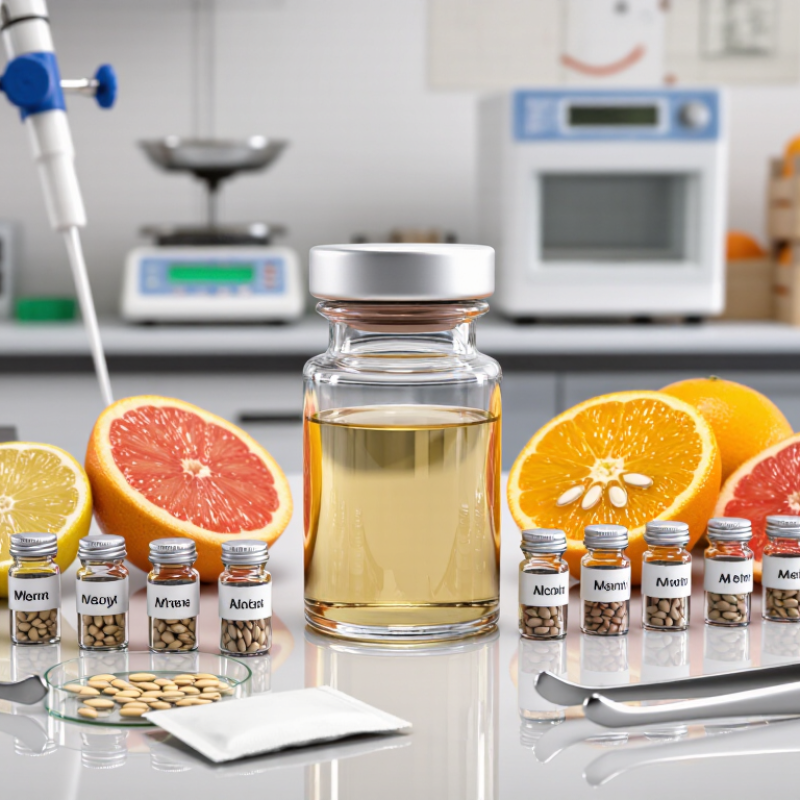
Citrus seed extract contains limonoids, flavonoids, phenolic acids, and residual seed oil. These compounds vary with species, maturity, drying temperature, and extraction solvent. FAOSTAT production data place global citrus output above 160 million tonnes in recent years. That scale creates a large by-product stream, but it does not guarantee consistent extract quality. When screening ten worldwide suppliers, buyers should request species identity, extraction conditions, and complete batch records.
HPLC provides a practical quality checkpoint. A validated HPLC-DAD or LC-MS method should identify limonin, nomilin, hesperidin, and relevant phenolics. The certificate should show calibration range, recovery, precision, limit of detection, and limit of quantification. AOAC guidance emphasizes documented validation and traceable reference standards. A clear chromatogram matters. Yet it is not enough. One industry testing report may show high marker content while missing pesticide residues, microbial counts, moisture, or solvent traces. I have seen specifications that looked impressive but lacked raw chromatograms. That weakness deserves attention.
Tips: Ask for three consecutive batch results, not one sample. Compare marker levels on a dry-weight basis. Confirm whether “total flavonoids” uses a validated reference compound. Check ISO/IEC 17025 laboratory accreditation where possible. Also, require storage data, because heat and oxygen can change citrus limonoid profiles. Supplier claims should remain provisional until independent testing confirms them.
| Rank | Anonymous Supplier Profile | Primary Sourcing Region | Typical Citrus Seed Feedstock | Common Extract Format | Key Bioactive Compounds | Recommended HPLC Marker Panel | HPLC Quality Metrics to Request | Typical Documentation |
|---|---|---|---|---|---|---|---|---|
| 1 | Mediterranean citrus by-product processor | Spain, Italy, Greece and nearby citrus-growing areas | Orange, lemon and mandarin seeds recovered from juice processing | Spray-dried aqueous or hydroethanolic extract; seed oil may be supplied separately | Limonoids, flavanones, phenolic acids, tocopherols and fatty acids | Limonin, nomilin, hesperidin, narirutin and total phenolic markers | RP-C18 identity chromatogram; retention-time match; peak-area or external-standard assay; resolution and repeatability data | COA, botanical identity, solvent-residue test, microbiology, heavy metals and pesticide screening |
| 2 | North American citrus ingredient processor | United States and Mexico | Orange, grapefruit and lemon seeds from juice and peel streams | Defatted seed powder, dry extract or cold-pressed seed oil | Limonoid aglycones, flavonoids, phenolic acids and unsaturated lipids | Limonin, nomilin, diosmin, hesperidin and naringin where applicable | Validated calibration range, LOD/LOQ, recovery, precision, system suitability and chromatographic fingerprint | GMP or HACCP evidence, allergen statement, residual solvents, microbial limits and stability data |
| 3 | Brazilian citrus-processing supplier | Brazil | Sweet orange, lemon and other commercial citrus seeds | Hydroethanolic extract, milled seed material or refined seed oil | Limonoids, flavonoids, chlorogenic-type phenolic acids and triglycerides | Limonin, nomilin, hesperidin, narirutin and phenolic-acid profile | HPLC-DAD or LC-MS confirmation, marker assay on a dry basis, moisture correction and batch chromatogram | Origin traceability, pesticide residue panel, aflatoxin test, heavy metals and export specifications |
| 4 | Chinese botanical-extract manufacturer | China | Orange, lemon, pomelo and grapefruit seeds | Standardized dry extract, water extract or ethanol extract | Limonoids, flavonoid glycosides, phenolic compounds and seed lipids | Limonin, nomilin, naringin, hesperidin and total flavonoid fingerprint | Assay specification with reference standards, blank control, peak purity, carryover and injection precision | ISO or GMP-related quality records, COA, non-GMO statement, residual solvents and contaminant testing |
| 5 | Indian citrus-seed and herbal-extract supplier | India | Sweet orange, lemon, lime and locally processed citrus seeds | Powdered seed extract, hydroalcoholic extract or seed oil | Limonoids, flavonoids, phenolic acids, phytosterols and tocopherols | Limonin, nomilin, hesperidin, eriocitrin and total phenolic profile | Documented sample preparation, authenticated standards, linearity, accuracy, precision and stability of solutions | COA, botanical authentication, microbial analysis, pesticide residues and product safety statement |
| 6 | Turkish and Eastern Mediterranean processor | Türkiye and Eastern Mediterranean | Lemon, bitter orange, mandarin and sweet orange seeds | Dry extract, seed flour or mechanically pressed oil | Limonoids, flavanone glycosides, phenolic acids and essential lipid fractions | Limonin, nomilin, hesperidin, narirutin and naringin | C18 fingerprint, marker identification by co-injection or MS, assay repeatability and moisture-adjusted results | Traceability, food-grade declaration, pesticide testing, heavy metals and microbiological specifications |
| 7 | South African citrus by-product supplier | South Africa | Navel orange, lemon, grapefruit and mandarin seeds | Cold-pressed oil, defatted meal or dry botanical extract | Limonoids, flavonoids, phenolic compounds and omega-6-rich seed oil fractions | Limonin, nomilin, hesperidin, naringin and fatty-acid profile when oil is supplied | Marker identity, peak-area consistency, oil oxidation indices and fatty-acid confirmation by GC when relevant | COA, origin statement, peroxide and acid values for oil, microbial limits and contaminant screening |
| 8 | Australian citrus ingredient supplier | Australia | Orange, lemon, mandarin and grapefruit seeds | Aqueous extract, dry powder or seed oil for food and nutraceutical use | Limonoids, flavonoids, phenolic acids, tocopherols and unsaturated fatty acids | Limonin, nomilin, hesperidin, eriocitrin and total phenolic fingerprint | Validated HPLC-DAD method, specification limits, system suitability, recovery and batch-to-batch comparison | Food-safety plan, allergen status, pesticide residues, heavy metals and shelf-life data |
| 9 | South American specialty botanical supplier | Argentina, Uruguay and neighboring citrus regions | Lemon, orange and mandarin seeds from juice-processing residues | Hydroethanolic extract, seed powder or mechanically extracted oil | Limonoids, flavonoid glycosides, phenolic acids and fatty-acid components | Limonin, nomilin, hesperidin, narirutin and naringin where species-appropriate | Reference-standard confirmation, chromatographic fingerprint, repeatability and quantification on an as-is or dry basis | COA, origin and lot traceability, solvent residues, microbial results and contaminant declaration |
| 10 | Southeast Asian citrus-extract supplier | Thailand, Vietnam, Indonesia and the Philippines | Pomelo, calamansi, lime, orange and mandarin seeds | Water extract, ethanol extract, dried seed powder or seed oil | Limonoids, flavonoids, phenolic acids, phytosterols and tocopherols | Limonin, nomilin, naringin, hesperidin, eriocitrin and species-specific fingerprint peaks | HPLC-DAD or LC-MS identity, retention-time tolerance, assay precision, recovery and matrix-specific validation | COA, botanical identification, microbial limits, heavy metals, pesticide residues and storage conditions |
Ask for monthly output, batch frequency, reserve capacity, and recent lead-time records. Several extraction lines may reduce seasonal shortages. Claims need evidence. A large annual figure can still hide unstable delivery.
No. Check the certificate scope, covered facility, expiration date, and issuing organization. Review recent audit findings and corrective actions. Daily hazard controls matter more than polished paperwork. Certification helps, but it is not proof of perfect performance.
The document should identify the batch, plant source, extraction method, test dates, and acceptance limits. Useful tests include active compounds, moisture, metals, microbes, and pesticide residues. Results should come from a qualified laboratory when possible. A vague certificate creates unnecessary doubt.
Request records linking the orchard, processing line, storage conditions, and finished batch. Ask the supplier to complete a mock recall exercise. Records should be assembled quickly. Days may be too long.
Major citrus-producing regions include parts of Asia, South America, the Mediterranean, North America, and Mexico. Each region differs in seed availability, storage, and processing controls. Production volume alone does not prove extract quality. Origin matters greatly.
Published studies often report yields around 20% to 35%. Cold pressing may produce less oil but a cleaner sensory profile. Other methods may recover more material. The figures are not perfectly comparable. Moisture, species, temperature, and yield basis can change results.
Not necessarily. Limonene is mainly associated with citrus peel oil. Seed extracts commonly contain fatty acids, limonin, tocopherols, and phenolic compounds. A laboratory chromatogram should confirm any limonene claim. A high number may reflect a different material.
Request batch-specific pesticide testing with sampling dates, methods, and detection limits. For metals, test lead, cadmium, arsenic, and mercury using suitable laboratory methods. Microbial checks should include aerobic counts, yeast, mold, and relevant pathogens. Review water activity and retained samples. I would inspect the warehouse too. PDFs cannot show everything.
Confirm laboratory independence, method suitability, matrix validation, and testing frequency. Compare limits with the destination market and intended application. Do not accept claims such as “metal-free” without numerical results. One passing test represents one batch. That is a limitation worth remembering.
This article presents a practical overview of Citrus Seed Extract suppliers worldwide, focusing on the science, sourcing, and quality controls behind this increasingly valued botanical ingredient. It explains the main bioactive compounds found in citrus seeds and outlines how HPLC testing can measure key markers, including limonene and related constituents. Global citrus production, exceeding 150 million tonnes, is examined as an indicator of the industry’s broad raw-material base and regional supply potential.
The supplier ranking framework evaluates production capacity, ISO 22000 certification, certificates of analysis, extraction yields, origin transparency, and full supply-chain traceability. It also compares the typical limonene profiles and processing characteristics of ten international supplier categories without promoting specific brands. For buyers, the article highlights essential compliance checks, including pesticide residues, heavy metals, microbial limits, batch consistency, documentation accuracy, and storage conditions. Together, these criteria help manufacturers identify reliable, quality-focused sources for food, cosmetic, and nutritional applications.

 Botanical